SPDT 5V PCB Mount relay 5Pin

18.00

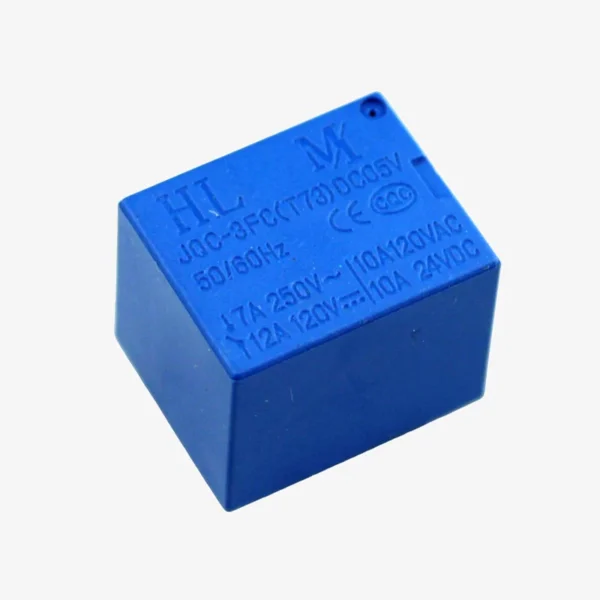
SPDT 5V Relay Module – 5-Pin PCB Mount Type

The SPDT 5V PCB Mount Relay (Single Pole Double Throw) is an electromechanical switch that allows low-power digital circuits like microcontrollers to control high-voltage AC or DC devices. Operating at just 5V DC, this relay is widely used in automation, home appliances, IoT projects, robotics, and switching applications.

The 5-pin design makes it easy to mount directly onto a PCB, and the SPDT configuration means it has one common terminal that can be connected to either of two outputs (Normally Open or Normally Closed), offering flexible switching options.


Key Features

  • āœ… SPDT (Single Pole Double Throw) configuration

  • āœ… Operates on 5V DC coil voltage

  • āœ… Capable of switching AC and DC loads

  • āœ… 5-pin PCB mountable package for easy soldering

  • āœ… Isolation between control and switching circuits

  • āœ… Compact and durable design

  • āœ… Ideal for switching motors, lamps, fans, solenoids, and more


Technical Specifications

Parameter Specification
Relay Type Electromechanical
Configuration SPDT (Single Pole Double Throw)
Coil Voltage 5V DC
Coil Resistance ~70Ω ±10%
Operating Current ~70–100 mA
Contact Rating (AC) 250V AC at 10A
Contact Rating (DC) 30V DC at 10A
Contact Material Silver Alloy
Switching Time (ON/OFF) ~10 ms / 5 ms
Insulation Resistance ≄ 100MĪ© (500VDC)
Dielectric Strength Between coil and contacts: 1500VAC, 1 min
Mechanical Life ≄ 10 million operations
Electrical Life ≄ 100,000 operations at rated load
Mounting Type Through-hole (PCB mount)
Number of Pins 5
Body Dimensions (approx.) 19mm x 15.5mm x 15.5mm
Weight ~10g

Pin Configuration (5-Pin Relay)

Pin Number Pin Name Description
1 Coil Pin 1 Connect to 5V DC
2 Coil Pin 2 Connect to GND
3 Common (COM) Common terminal for NO and NC
4 Normally Closed (NC) Connected to COM when relay is off
5 Normally Open (NO) Connected to COM when relay is on

Applications

  • Home automation systems

  • Switching AC appliances with microcontrollers

  • Robotic control systems

  • DIY IoT devices

  • Smart home projects

  • Timer-based control circuits

  • Motor and light control circuits